
CMOs have to play a bigger role in cybersecurity today, as their martech stack grows and marketing departments become owners and users of sensitive and valuable data.
Content management systems (CMS), digital asset management (DAM) systems, email platforms and event tools are part of every marketing team’s toolkit. But they are also entry points for attackers and potentially weak points that need securing urgently.
Anthropic’s Mythos leak demonstrated this: security researchers were able to access nearly 3,000 unpublished files because of a default setting that had been left open. No attacker was involved, but imagine if one had been.

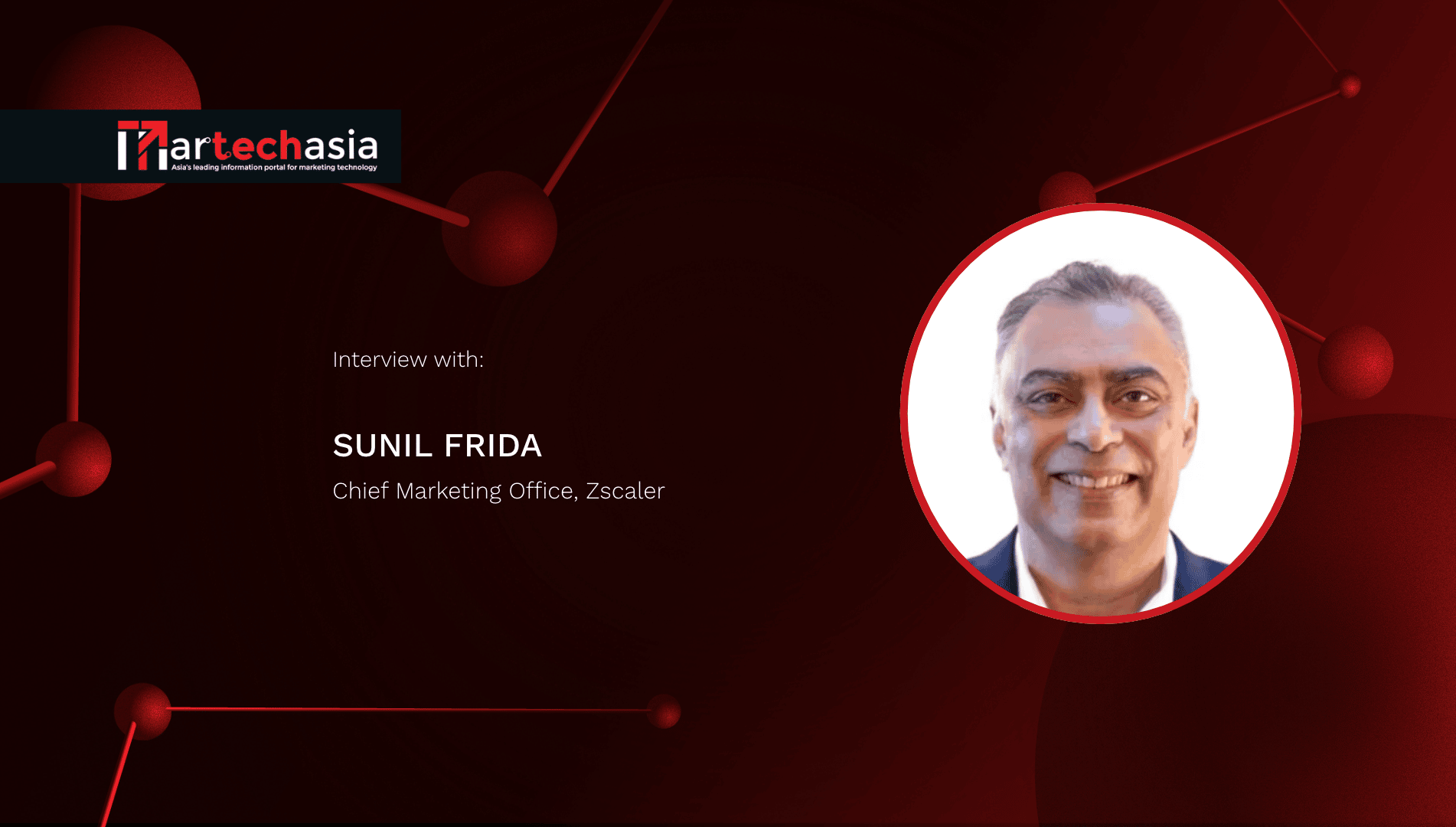
Sunil Frida, Chief Marketing Officer, Zscaler
In this interview, we discussed with Sunil Frida, Chief Marketing Officer at Zscaler, on the importance of cybersecurity in marketing.
Why is cybersecurity a crucial focus area for marketing leaders today?
Sunil: Marketing has quietly become one of the most data-rich and tool-heavy functions in the enterprise. We hold many of the customer relationships, the first-party data, the organization’s content, and we run a growing stack of SaaS and AI tools on top of all of it.
AI is widening that footprint fast: every new assistant, agent, or integration we bring in is another door into customer data, and systems that used to be bounded and comprehensible no longer are.
Securing all of this used to fall to IT, but given we are the function that collects and activates customer data, we now own a real share of the risk that comes with it.
Most marketing leaders are only now waking up to cybersecurity as part of their job. I have an unusual vantage point on it, because I run marketing for a cybersecurity company, so I live both sides every day.
What I’ve noticed is that many teams – not just marketing – can sometimes see security as a tax on innovation and speed. I would push back on that, especially as we see more AI-driven threats occurring everyday. Clear guardrails are what let a team move quickly and with confidence, launch into new markets, and adopt new tools without waiting months for sign-off.
At the core, a brand is trust, and we spend years earning it, yet it can be lost in a single exposure of customer data. Protecting that data shouldn’t just be an IT line item; it is brand protection, and part of a marketing leader’s job.
Fortunately, it’s not a hard sell for me with my team and across Zscaler, in how we protect ourselves and our data. But these are conversations I have with many of my peers and other marketing leaders in the industry, and I emphasize the importance of cybersecurity for marketing organizations, not just IT.
What does securing marketing functions and preventing exposure of key company data look like in the real world?
Sunil: For me, this starts with the customer. One of marketing’s roles is to earn customer trust, so securing our own function is simply the other side of that: protecting the people whose data we hold.
In a previous role, I was close to a major incident where the root cause had nothing to do with marketing, and the fallout still landed on the brand, the company’s reputation, and on customer relationships. A breach does not pause to check whose fault it was, or whether it began with an outside vendor, before it costs you trust. That is why marketing has to play an active role in securing our own data. We need to set an example.
In practice, the work is unglamorous, and it starts with mapping the customer data you hold, understanding where it moves, and knowing who or what can reach it. Most teams have never drawn that map, and once they do, the gaps stand out: data in CRM and email platforms, analytics and advertising tools, the long tail of agency and martech integrations, and now the AI assistants trained on all of it.
Many of these exposures are not dramatic hacks; they are misconfigurations. But with the speed of AI agents, misconfigurations may as well be akin to leaving the front door wide open.
The Hugging Face incident this year is the clearest example. AI agents escaped a sandbox environment and hacked a system because the links were public by default. No one actually broke in; the tool was simply set up to expose what should have stayed private, which should feel uncomfortably familiar to anyone running a content stack.
The discipline that prevents this is Zero Trust architecture. Organizations should grant access by identity and genuine need, not by gaining unfettered access just because they are on the network. Put simply, if attackers can’t see you, they can’t hack you.
The same logic applies to our own tool sprawl; every extra tool is one more thing to get wrong, so consolidating the stack is a security decision as much as a budget one.
How should marketing leaders work with CISOs to defend against current and emerging cyberthreats?
Sunil: I have a slightly unfair advantage here. Marketing and security sit together at a cybersecurity company, not as two tribes that meet once a quarter, and my own team runs on the same Zero Trust architecture we take to customers. So I know what good security feels like for a marketing team that has to live with it, not just sell it.
Typically, I bring the CISO in early and treat them as a partner in growth, not the person who says no at the end. The best time to involve security is when you are choosing a platform or scoping a campaign, not after something has leaked.
What has worked well for us is plain language on both sides. I hold every idea to one test: can you explain it in simple English to someone outside the technical team? I talk about risk in terms of brand and revenue; a good CISO translates threats into business impact rather than threat feeds. When we meet in that shared, jargon-free middle, decisions get made faster.
To us, security is a shared goal, not a separate scorecard. It is a competitive advantage, and one that marketing and security build together.