




First industry-endorsed study found attentive viewing of almost 80% for adverts on streaming platforms with minimal drop-off over time.
Global media measurement pioneer Amplified and the Video Futures Collective (VFC), an alliance of Australia’s foremost video streaming platforms, have released the results of the first market-wide, industry-endorsed study of attentive viewing in streaming video advertising.
The study found that almost 80% of a streaming video advert is viewed attentively on average, versus around 20% in digital environments.
The disconnect between an advert being served and an advert being seen obscures substantial waste. Time-in-view is the de facto metric for video advertising viewability, but this measures only that an advert was on screen, not that it was being looked at. The VFC deployed Amplified to measure attentive viewing across its members’ streaming video platforms and compare them to other channels.
The study, carried out over 6 months between April and September 2025, analysed real in-room viewing behaviour across 300 Australian households, measuring how audiences engaged with ads on streaming video platforms on connected TV devices (CTV). Using second-by-second active, passive and non-attention metrics, the research benchmarked streaming video performance against other media platform AUD benchmarks including linear TV, scrollable social, mobile video, online display and cinema.
Amplified found streaming video has a significant attention advantage, outperforming all digital environments with minimal advertising waste:
- Streaming video audiences pay attention to almost 80% of an advert on average: Adverts on streaming platforms deliver an average of 59% active attention and 20% passive attention for a total of 79%. Linear TV typically sees 3x the amount of passive attention (60%), due to the predictable cadence of ad slots and type of programming that encourages background viewing.
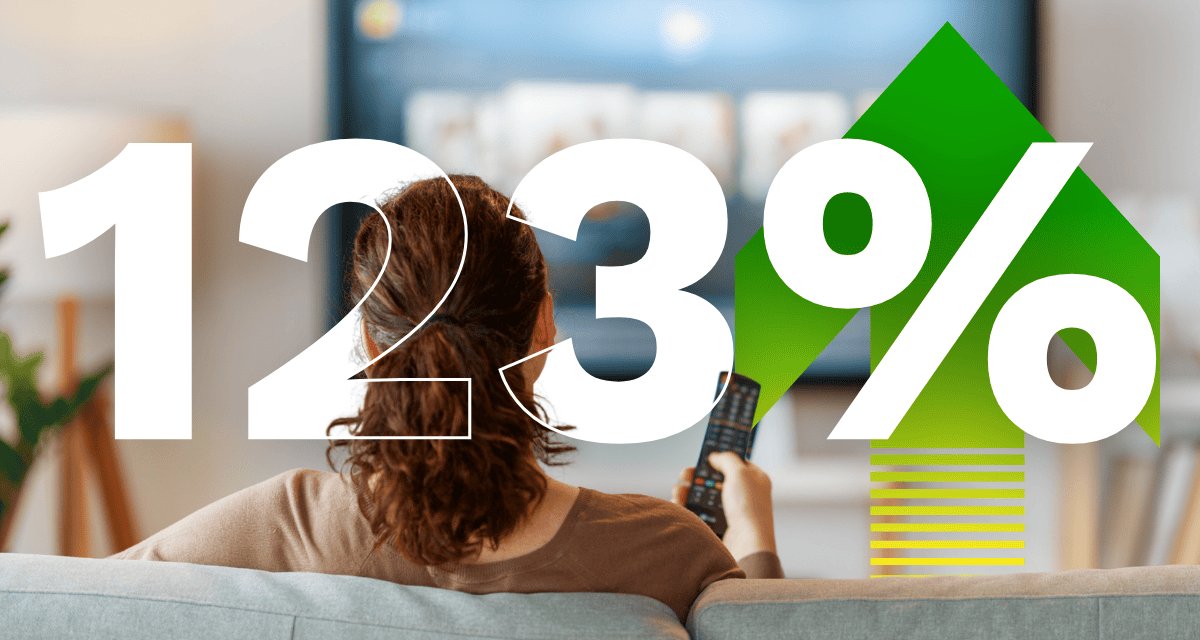
- Only cinema’s captive audience beats streaming video for average attention: Streaming video attention outperforms YouTube mobile by 66%, large format OOH by 74%, linear by 80%, scrollable social by 123%, and display advertising by 161%, with cinema only narrowly beating streaming video by 6%.
- Duration of attentive viewing accounts for this massive performance delta: For a 15 second advert on social media, attention starts high at around 75%, plummets to 25% by four seconds, then hits single digits by its end. In streaming video, attention starts high and stays high throughout, which means that each view can be trusted as a complete view.
- All streaming video delivers market-best attention, but genre and timing affect its intensity: Comedy and documentary programming deliver the most active attention at 81% and 67% respectively, while active attention throughout the day ranges from 51% in morning slots up to 69% in the evening.
Toby Dewar, VFC Steering Committee Member and Director of Customer Engagement of Foxtel Media, said: “How often do we hear about people having short attention spans these days? It turns out that it’s not audiences who are to blame, but the media environments they spend time in. Social platforms are built for reach and engagement, always pushing the user to the next video, so it’s no surprise their adverts can’t hold attention. Streaming platforms have content that people have chosen to watch, and they watch it attentively, advertising included. Audiences have no problem paying attention – advertisers just need to choose the channels that earn it, and streaming video is one of them.”
Bec Brooks, Head of Research Operations at Amplified commented:“Advertisers spend significant time and resources on video creative, only to have content go to waste because audiences aren’t paying attention. This study proves that streaming video bucks that trend, giving advertisers the confidence that viewers will stay put for their whole message, not just the first few seconds. We found this is true all the way up to minute-long adverts. I’m excited about the implications this has for high-impact storytelling that makes full use of streaming video’s captive audiences.”
The full results of phase one of the study can be downloaded here.