

This strategy guide examines prompt selection, repeated testing, platform comparisons, mentions, citations and business outcomes while acknowledging measurement limitations.
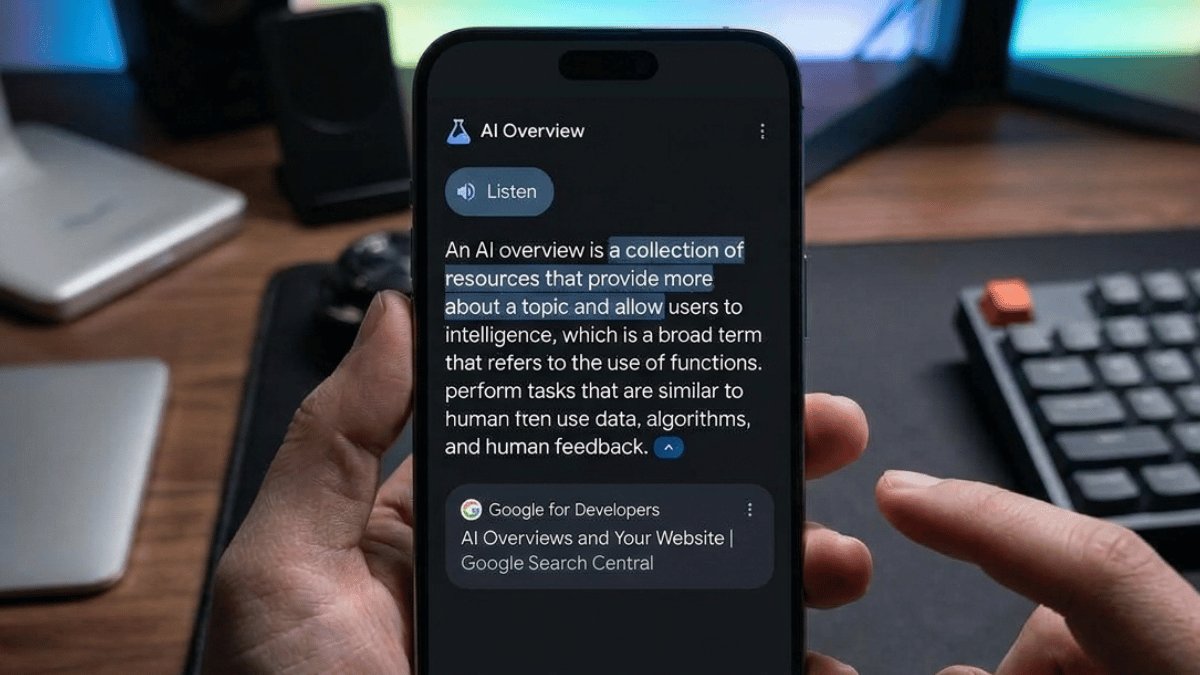
AI-generated answers are adding another layer to how people discover brands. For marketers, the challenge is not simply to appear in those answers, but to understand whether that visibility reflects the questions prospective customers actually ask.
According to Dan Kalinski, APAC Managing Director at NP Digital, the starting point is measurement: A brand can look strong against generic category prompts, yet be absent from more specific buyer questions. Adding more prompts will not necessarily fix that mismatch; the questions being tested need to reflect the audience and the decisions they are trying to make.

Dan Kalinski, APAC Managing Director, NP Digital
This guide examines Kalinski’s methodology looks at how to build a relevant prompt set, define what counts as visibility, and interpret the results without reading more into them than the evidence supports.
Six steps to better AI visibility
1. Treat AI visibility as part of your search strategy
Search visibility is not just about ranking on a results page. It can also include appearing in featured snippets, being mentioned in AI-generated answers and having content cited as a source.
Answer Engine Optimisation (AEO) and Generative Engine Optimisation (GEO) are terms used to describe efforts to improve these forms of visibility. Their boundaries overlap, however, and they should not be treated as replacements for established SEO practices. Google’s guidance, for example, says its generative search features remain rooted in its core ranking and quality systems.
Set out which outcomes matter to your business: a brand mention, a recommendation, a citation or a visit to your website. These are different outcomes and should not be counted as interchangeable.
2. Build prompts around real buyer language
Generic category prompts can provide a baseline, but they should not be the only foundation for measurement.
Build prompts around real buyer language and decision stages. Four elements can help structure the work:
- Segment: Set the relevant market context
- Persona: Identify who is asking
- Intent: Establish what they are trying to get done
- Variable: Isolate the factor being tested, such as “fastest” against “cheapest”
Use customer questions and documented buyer research to inform these elements. Distinguish wording customers actually use from context added by your team: a detailed persona does not automatically make a prompt representative.
Start with a manageable set of relevant questions. There is no need to assume that either a small, carefully selected set or hundreds of generic prompts will always produce better measurement. Coverage and relevance matter more than an arbitrary target count.
3. Separate prompt coverage from repeated testing
Running more distinct prompts does not, by itself, fix a poorly chosen prompt set. But repeating the same prompts serves a different purpose: checking how much the answers vary.
AI-generated answers can change between runs and with model versions, conversation context and user history. Record the conditions under which responses are collected, including the platform, date and whether the conversation starts with a fresh context.
When comparing results over time, keep those conditions as consistent as possible and document changes. Treat an isolated appearance or disappearance as an observation to investigate, rather than immediate evidence of a lasting shift.
4. Define your primary metrics
Tracking platforms can provide a baseline picture, but check how each platform calculates its metrics before comparing results. According to Kalinski, three useful starting points are:
- Share of voice: Your brand’s share of mentions relative to a defined set of competitors. Specify whether the calculation uses total mentions, responses or another denominator.
- Visibility percentage: The percentage of tested responses in which your brand appears. Report this against the tested prompt set, rather than presenting it as a measure of all AI-search activity.
- Mention frequency: How often your brand appears in the collected responses. Distinguish repeated mentions within one answer from appearances across separate answers.
Track mentions and citations separately. An AI answer may name your brand without linking to your website, or cite your content without recommending your business.
Also, distinguish favourable, neutral, negative and inaccurate references. A higher mention count is not necessarily a better result.
5. Look beyond the headline percentage
Once the basic measures are clear, examine how results vary over time, between questions and across platforms. Kalinski added the following pointers:
- ✓ Run length — the number of consecutive observations in which a brand remains visible — can help describe persistence. Longer runs indicate more persistent visibility under the tested conditions; they do not establish that a model has learned a stable association with the brand.
- ✓ Compare platforms separately before combining their results. Strong visibility on one platform and weak visibility on another may be important, but the significance depends on which platforms your audience uses.
- ✓ More complex statistical measures should have a clear purpose. They are useful only if the team can explain what is being measured, how it is calculated and which decision the result will inform.
6. Connect visibility to business outcomes
A dashboard can show whether a brand appears in tested answers. It does not, by itself, establish how many prospective customers encountered those answers or whether the appearances influenced their decisions.
Where possible, assess visibility alongside referral traffic, enquiries, customer feedback and other relevant business measures. Be explicit about what you can observe and what remains uncertain.
The aim is not simply to produce a higher visibility score. It is to understand where your brand appears, whether those appearances are accurate and relevant, and what action — if any — the evidence supports.
Kalinski recaps: “A brand can look strong against generic prompts and (yet) be functionally invisible against the prompts real buyers actually use.” The pointers in this guide can be used to maximize AI-linked visibility.