





Marketers face inconsistent attribution across channels, and AI only magnifies those weaknesses when it relies on incomplete signals.
The marketing industry has a measurement problem, and AI is making it harder to ignore.
For years, marketers have dealt with fragmented attribution, conflicting platform reports, and disconnected measurement across web and app. That has been inconvenient, but often manageable: teams could compare dashboards, apply judgement, and make a call.
That is becoming harder as AI takes on more of the decisions marketers once made themselves. When the signals feeding those decisions are incomplete or inconsistent, AI will reflect those weaknesses rather than correct them.
The basic point is simple: AI may help marketing become faster and more efficient, but its usefulness depends on the quality of the data behind it. The more relevant question is not whether AI can improve marketing, but whether the measurement practices around it are mature enough to support it.
AI makes measurement more important
Marketing has long tolerated a level of reporting inconsistency that would be difficult to accept in many other business functions. It is common for different dashboards to produce different answers about what drove a conversion. That usually happens because each platform sees only part of the customer journey. Human judgement has traditionally helped fill in the gaps. Marketers compare reports, add context, and make decisions based on experience.
AI changes the stakes. As it plays a larger role in optimisation, the quality of its decisions depends on the quality of the signals it receives. When those signals are incomplete or inconsistent, the result is not better judgement at scale. It is faster action based on partial information.
That means measurement problems are no longer just an issue after a campaign ends. They can now influence decisions as they happen, affecting budget allocation, audience targeting, and campaign optimisation.
The measurement foundation
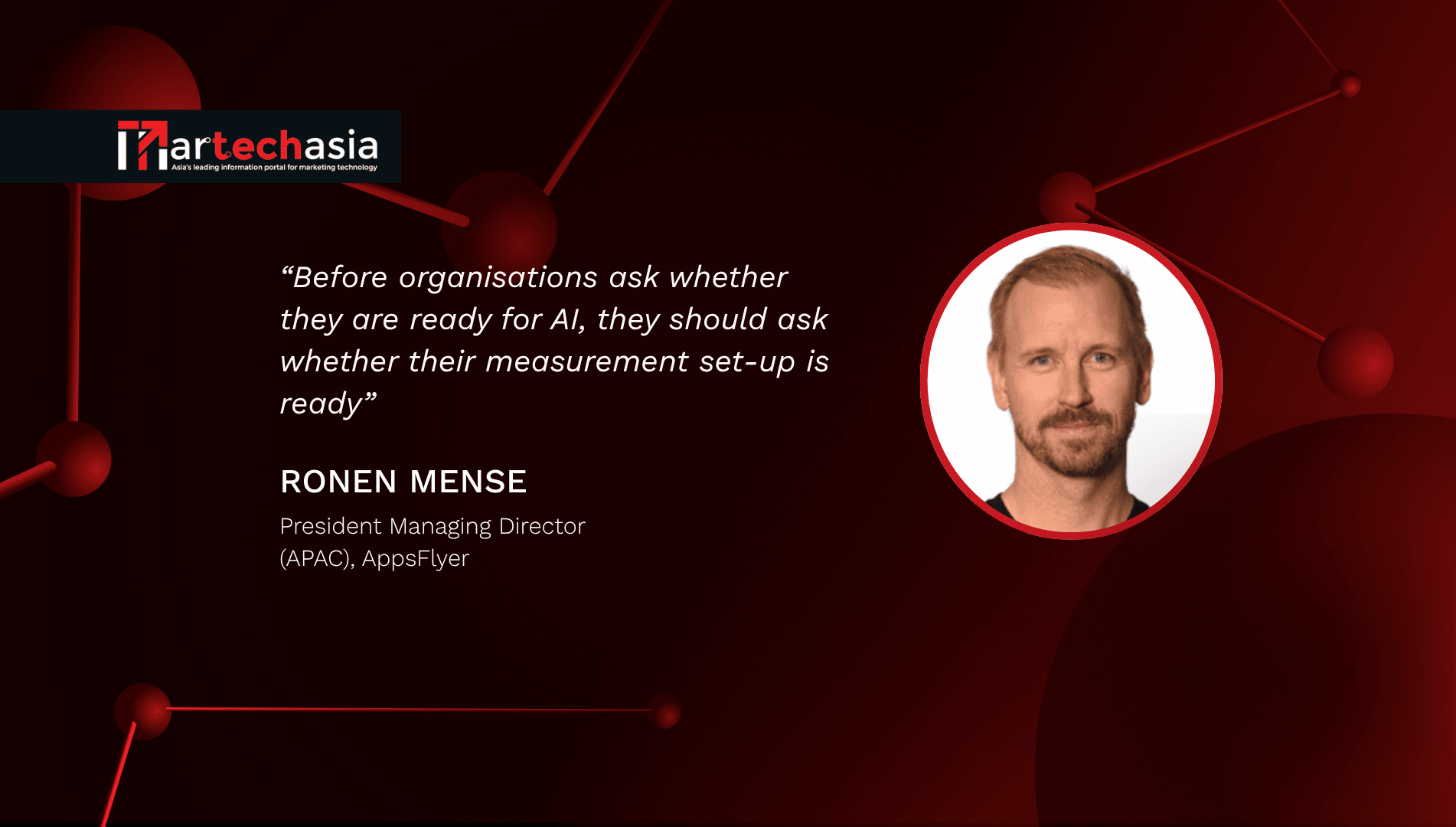
A lot of the discussion around AI focuses on adoption. Marketers are testing automation tools, exploring AI-assisted optimisation, and looking for ways to work more quickly. But before organisations ask whether they are ready for AI, they should ask whether their measurement set-up is ready.
AI is only as effective as the signals it receives. If conversion data is fragmented, inconsistent, or incomplete, automation will optimise against an incomplete picture of performance. That may produce faster decisions, but not necessarily better ones.
It also helps to think about the customer journey as it actually happens. People do not move through marketing in neat categories such as web, app, desktop, or mobile. They move across devices, platforms, and touchpoints. Yet many organisations still measure those channels separately, which can create blind spots.
Measuring channels in isolation can show how each one performs on its own, but it may miss how they interact. Without a connected view of the customer journey, AI is left to optimise pieces of the process rather than the whole.
Why web and app matter
One of the most persistent measurement gaps sits between web and app environments. These channels developed separately, with different tools, teams, and measurement approaches. Mobile measurement matured earlier because the ecosystem forced it to. Web did not go through the same adjustment, so many organisations still measure web and app performance through separate systems.
However, customer behaviour has moved beyond those boundaries. People do not experience a brand as separate measurement categories, and AI does not optimise based on how organisations divide their reporting structures: it works with the signals it receives.
That is why measurement gaps matter more now than they did before. If the input is fragmented, the output will be too.
The practical takeaway
Before organisations add another layer of automation, they need to be clear about whether they trust the measurement underneath it.
Clean signals, connected measurement, and a fuller view of the customer journey matter more than adding more tools on top of a weak foundation. AI is not a substitute for measurement. It depends on it.